
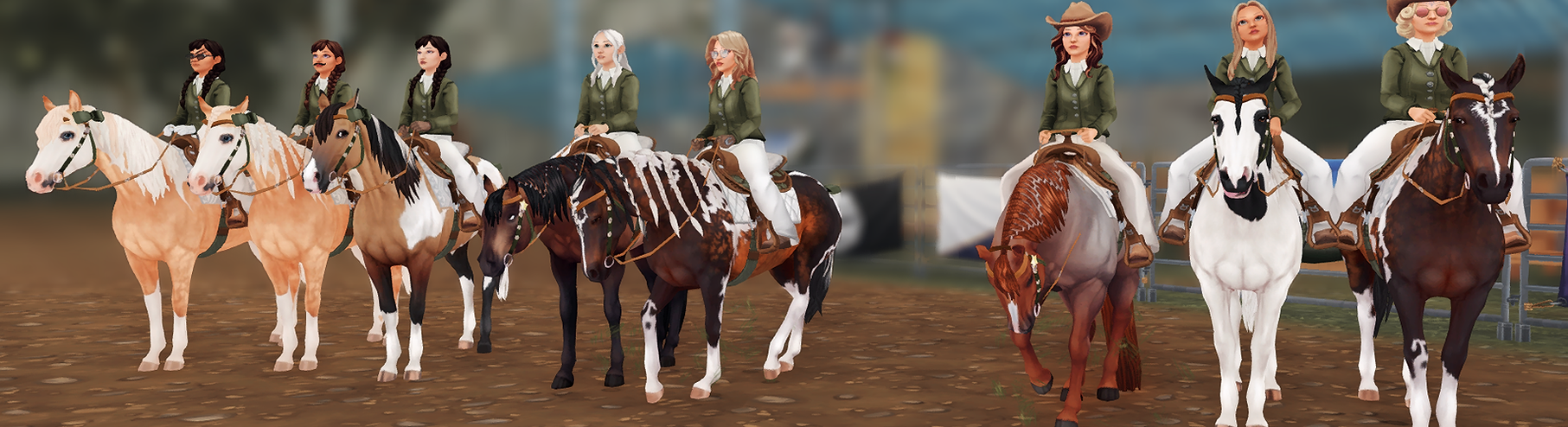
Western Pleasure Shows
Bringing you a new, fun and engaging way to ride western in Star Stable Online
Western Pleasure Shows
Western Progress's Official Perfected Western Pleasure Method

Western pleasure is a western style competition at horse shows that evaluates horses on manners and suitability of the horse for a relaxed and slow but collected gait cadence, along with calm and responsive disposition. The horse is to appear to be a "pleasure" to ride, smooth-moving and very comfortable.
Acceptable Horses and Gear
.png)
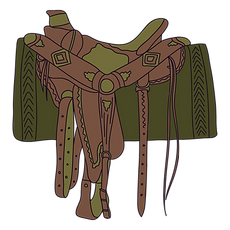
As apart of the western pleasure shows, we strive to continue keeping them as realistic as possible. This includes the horses and the outfits. We have Created a handbook via google docs that is a guide for our horse and rider acceptable gear. Re Chapter 1 for all the information. Western Pleasure is Under Category B.
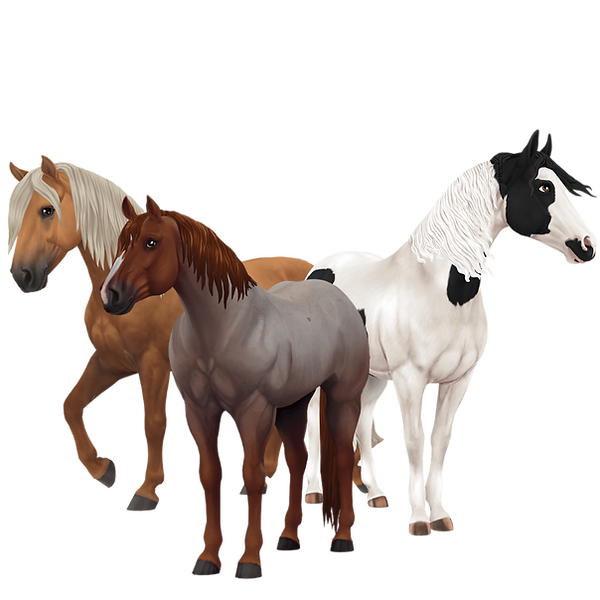
The chosen horse breeds we have hand picked for our western pleasure shows are the..
✪ American Paint Horse
✪ Quarter Horse
✪ Criollo
We chose these breeds for the realistic western foundations within the Western Pleasure shows In real Life.
Required Horse Breeds
.png)
Section 1: Presenting to the judge
.png)
Apart of the western pleasure foundation criteria, each rider thats competting in the class is to enter the arena seperatly and preset ot the judge, including a bow and positioning themselves within the arena going in the direction called by the judge. Riders untill compltete will continmiue to enmter, present and organise themselevbes within the arena for the the class to start.
✪ This portion is judged by your straightness, effectiveness and timing when presenting.
Tutorial Display is for view and ideas on how to enter arena. This portion is judged by your straightness, effectiveness and timing when presenting.
✪ Riders name and Entry Number will be called.
✪ Rider will enter in a walk through the gate
✪ The rider will line up in front fo the judge Half a horse length away.
✪ Rider will Bows a few seconds after halting
✪ Judge will then announce the direction the rider will exit and for them to stand close wise in the arena { Right hooves facing in }
Step by Step Rundown
You want to stand between a FULL Horse length to HALF a horse length in front of the judges when presenting.
.png)

This is what it would look like on your screen when your presenting. You have enough space to present in a suitable spacing. Your main am is a FULL horse length
If you are to far away, or far to close you will loose substantial points. Presenting to the judge gives you the most amount of points. You are scored out of 10. The judge is meant to see you clearly.
Section 2: Lining Up for success
The next section of our western pleasure shows is lining up on the outside of the arena. We want riders to line up respectfully, cleanly, straight and with the correct spacing between riders. This ensures your success and the full chances of receiving high points. After presenting to the judge you'll be asked to line up exiting left or right, always facing close wise. You'll be scored on accuracy, arena awareness and Rider awareness. If your lined up correctly your take off into the first gate set will be much easier for you and gives the rider in front of you a chance to not be compromised.

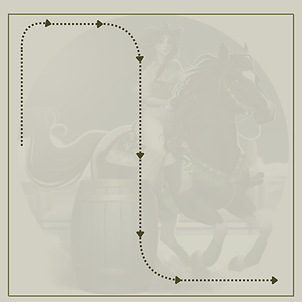
✪ An idea of where the rider will go Within the Star Shine ranch Arena.
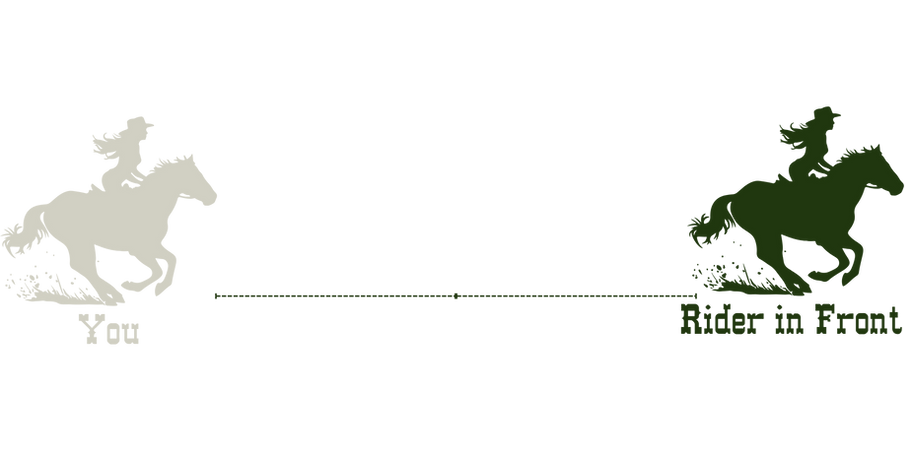.png)
This is how you want to line up BEHIND the rider if there is one in front of you. 2 FULL horse lengths
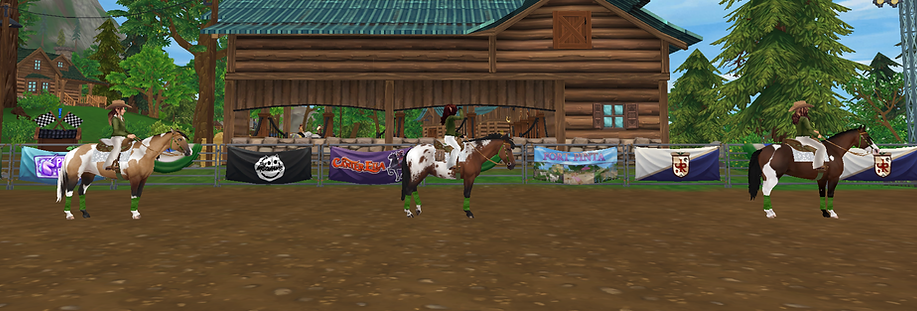
When lining up you want to ensure you are leaving enough space for both YOU and the rider in front of you. We look for the correct spacing which will always be 2 FULL horse lengths away from the person in front of you. This allows for the first gait set screen delay to take effect and have you knowing how far off you will be. Rider who merge on the instructors screen including the in front rider, BOTH will loose points for Arena and rider Awareness.
Odd Numbers in line
Even Numbers in line
If you are Odd riders in the line, 1, 3, 5 etc { NOT YOUR COMPITION NUMBER } You will ensure you aim for the outer side of the arena and want to watch the riders behind you for passing. Aim for the corners closely and stay to the outside as much as you can until all riders are prepared and in space spread out through the arena. You can then move further off the fence.
If you are an EVEN riders in the line, 2, 4, 6 etc { NOT YOUR COMPITION NUMBER } You will ensure you aim for the inside of the arena and want to watch the riders in FRONT of you. You want to ensure you are prepared to Type " Rider O" into chat or using voice Call state the same " Rider Over Taking"
Once the riders are assembled in the designated lineup, the judges will approach to evaluate their arrangement, as this component of the arena performance holds significant importance for the initial gate setup. Riders must ensure that they have utilized both Rider and Arenea awareness; failure to prepare adequately will affect not only their performance but also that of the riders behind and in front of them.
What the Judges are looking for in your line up.
Straightness
The judge will assess the alignment of your position in relation to the line behind each rider; maintaining a straight posture enhances your chances of success, while any angle or veering will result in lost points.
Spacing
Riders will earn higher points for maintaining proper spacing within the arena, aiming for proximity of two full horse lengths; points will be deducted for being either too far away or excessively close.
Horse behaviors
While we support your RRP with horses and their unique personalities, be aware that selecting a mischievous horse or having their feet adjust for straightness may result in point deductions.
Section 3: Riding the Arena
Once riders have been judged, Judge 1 will be commanding and watching the whole arena. Judge 2 will also be watching riders around the arena. Judge 1 will call a " Gait set" of any speed and riders will need to ensure they allow enough spacings to not merge or veer away from the out side of the arena. Riders will be given between 6-10 different gait set changes on both diagonals. These will be a mix of " Walk, Jog and Lope". Riders will not be halted during this duration of the discipline and will continue moving forward. Riders need to ensure they remain straight and maintain Rider and Arena Awareness when riding in a Large or Small Group Setting.
Over Taking in the Arena
When over taking in the arena you want to ensure you always have your chat open with "Rider O" Prepared for incase you need to over take. Over taking you want to ensure you have 2 Horse spacings AWAY from the rider beside you to avoid veering or merging on the commanders screen as both riders will be deducted points.
You want to ensure you have this the whole way around the rider. You want to ensure the 2 Full horse lengths need to start from right before the over taking and during. Riders are welcome to use more spacings if needed.
![5[1].png](https://static.wixstatic.com/media/b14d99_346219515f3b43b5b2b20700a4584ea1~mv2.png/v1/fill/w_353,h_353,al_c,q_85,usm_0.66_1.00_0.01,enc_avif,quality_auto/5%5B1%5D.png)
Staying to the outside of the Arena.
![6[1].png](https://static.wixstatic.com/media/b14d99_f2e6c8389a5b4244877c6a5340bcc82c~mv2.png/v1/fill/w_556,h_533,al_c,q_85,usm_0.66_1.00_0.01,enc_avif,quality_auto/6%5B1%5D.png)
When the rider has adequately positioned and is prepared to re-enter the out side of the arena, it is essential to ensure that a distance of two full horse lengths is maintained in front before they proceed to veer back towards the outer edge of the arena. if you are court in a corner aim to finish your over taking after you have passed it.
Example of an over take

When a Rider is executing their designated gait, it's important for them to keep a specific distance from the railing, ensuring they maintain enough space from the fence while not encroaching too far into the arena, which allows for smoother overtaking of other Riders; they must uphold a minimum of Character Spacing and not exceed Half Horse Spacing to facilitate entering corners at a comfortable distance and with a clean line. Riders need to ensure they are aware of there Rider and Arena Etiquette when reforming all gates and Over taking.
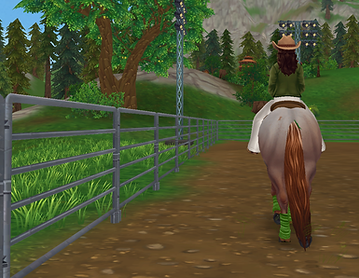
What a good spacing looks like on your screen
Pebbled lines help you in the arena!!

.png)
The two pebbled line tracks closest to the railing are another great way to ensure your using the correct spacings!

Here is an example of the two important spacings to remember when your riding in the arena. If your not using these spacings over taking riders will find it a lot harder to ensure a smooth over taking.
-
Dotted Line Indicated Character Spacing
-
Solid Line indicated Half a Horse length
Section 4: Gait sets & Performance
Once riders have completed their initial presentation to the judge and organized themselves following the first gate set, they will be instructed to perform a total of six gait sets. This means that each of the required gaits for the class will be performed twice during the round. The specific gaits to be demonstrated are: Walk, Trot (Jog), and Canter (Lope).
Riders will begin by moving around the arena in the designated direction at the judge’s command. At a specified point, a diagonal or rein change will be called, signaling riders to change direction. This change is intended to show balance, control, and the horse’s ability to transition smoothly. During the rein change, riders are expected to maintain forward motion and proceed in the opposite direction as instructed.
For further clarification and examples of proper rein changes and diagonals, please refer to Section 5 of the competition manual.
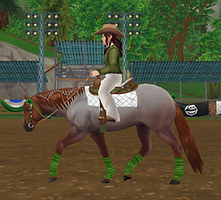
Examples of gait sets


Walking Set
A four-beat gait where each hoof strikes the ground independently in a regular, rhythmic sequence: left hind, left fore, right hind, right fore
Jog ( Trot ) Set
Is a two-beat, diagonal gait. The trot is a general term, while "jog" is often used in Western riding and can imply a slower, more relaxed version of the trot
Canter { Lope } Set
The canter and lope are both three-beat gaits. With the lope being the term used in western riding. The Lope is generally a slower pace.
Section 5: Changing the Diagonal
Once the riders have completed the initial set of all three gaits { Walk, Jog , and Lope } in the original direction, Judge 1 will initiate the next phase of the exercise. At this point, the judge will select a rider positioned somewhere within the arena, typically someone who is either significantly ahead of the majority of the group or located along the long side of the arena.
he chosen rider will be instructed to perform a change of direction, commonly referred to as a " Rein Change."
This change is to be executed at a point within the arena that the rider deems most suitable, taking into account both safety and flow of the ride. The goal is to allow riders to demonstrate their ability to make thoughtful decisions while maintaining Rider And arena adequate plus there control during the transition between directions.
Key Tips for Rain Changing
Tip One
Tip Two
When selecting the point in the arena where you are changing direction, it is essential that riders remain aware of their surroundings at all times. Carefully observe the positions and movements of other riders within the arena, particularly those who are still continuing on the original path. Your chosen point for changing rein should be made with consideration and remembering screen delay, because without it the result could be a merge on the judges screen. Maintaining spatial awareness and good judgment during this transition is a key element of responsible and effective riding.
RIDER AND ARENA AWARENESS
When choosing the timing for the direction change, it’s important to avoid sharp or tight corners. Instead, aim for smooth, gradual turns by gently tapping your keys. While sharp corners may give you a quicker view of the arena, they can make it harder to maintain proper straightness. When changing the rein avoid abrupt merges or tight turns. Use the same soft, tapping aids to guide your horse cleanly back into the arena, maintaining flow, balance, and precision throughout the transition.
SMOOTHTRANSITIONS & EFFICIENCY
Examples of a Rein Change { Changing your diagonal }

_edited.png)
_edited_edited.png)

Section 6: Final Line up
The final lineup can be particularly challenging for riders, especially when factoring in any delay on their screens. This portion of the event typically occurs during the walk set, which is the final gait in the arena work segment.
Riders are expected to approach the lineup area in a composed and respectful manner, demonstrating awareness of both the judges and fellow competitors. It is important that riders remain observant, maintaining appropriate spacing as they position themselves. Proper lineup procedure requires riders to present themselves directly in front of the judges, taking care to approach from behind any participants who have already taken their place.
This phase of the competition is evaluated based on three key criteria: straightness, etiquette, and overall arena awareness. Riders should be mindful that how they carry themselves during this final presentation can significantly impact their final score. Attention to detail and knowing where you and the other riders are at all times is essential to this aspect of the disipline.
Examples of Good and Bad line up Etiquette
Here you can see the rider using there camera to observe there surroundings and ensuring they are keeping a Character + Half horse Spacing or even greater between them and the other riders to ensure they don't merge on the Judges screen.
Good Example of a Line up
Here you can see the rider isn't using there camera to observe there surroundings and ensuring they are keeping a Character + Half horse Spacing, they are just walking with there camera behind and not looking around there surroundings to ensure no merging.
Bad Example of a Line up

Example of a perfect rider line up with appropriate spacings.
When riders are headed for the line up from the outer edges of the arena and prepare to line up in front of the judges, it is essential that they maintain adequate spacing between themselves and other riders. This allows the judges a clear line of sight and supports accurate evaluation based on the event criteria.
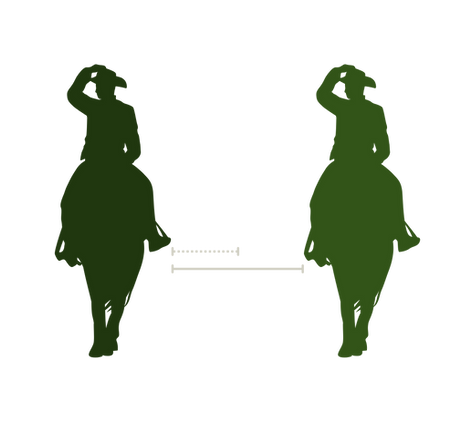
Riders are scored using a “half a horse to one character” spacing guideline. If the spacing is too wide, the rider line will become too long; if it is too narrow, judges may struggle to assess riders accurately due to insufficient separation between them. It's important to remember that proper spacing not only contributes to a more professional appearance but also sets each rider up for success by enabling precise judging.
Spacing in the Line up.
-
Dotted Line Indicated Character Spacing
-
Solid Line indicated Half a Horse length
Section 7: Your 5 step Role Back
This section is a critical part of the discipline, as your score is heavily based on how well you execute your rollback. When performing a rollback, riders must ensure their horse completes exactly five steps in total.
The breakdown is as follows: the horse's lead leg { The leg you see that moves first } should take three of the five steps, followed by the opposite leg completing the remaining two steps. The total must equal five distinct steps.
Scoring penalties are applied for incorrect step counts:
-
If a rider performs six steps or more, they will lose 2 or more points.
-
If only four steps are completed, 1 point will be deducted etc.
The goal is to achieve exactly five steps. Going over or under will result in point deductions, with penalties increasing the further you deviate from the target.
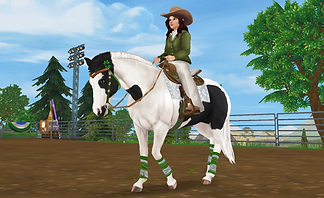
Paint Horses Examples
Left leg stepping first

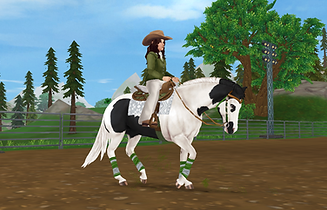
Right leg stepping Second

Quarter Horses Examples
Left leg stepping first

Right leg stepping Second


.png)

The Paint Horse always steps back first with his LEFT Leg
The Quarter Horse always steps back first with his LEFT Leg
Skill level: Expert
Skill level: Advanced
Criollo Horses Examples
Skill level: Beginner

Left leg stepping Second
Right leg stepping first
The Criollo always steps back first with his RIGHT Leg

Section 7: Final Lope Circle
The final stage of the Western Pleasure Fundamentals is critical, as it offers riders the opportunity to earn additional points when executed correctly. In this portion, the rider must respond precisely to the instructions given by Ring Master 2.
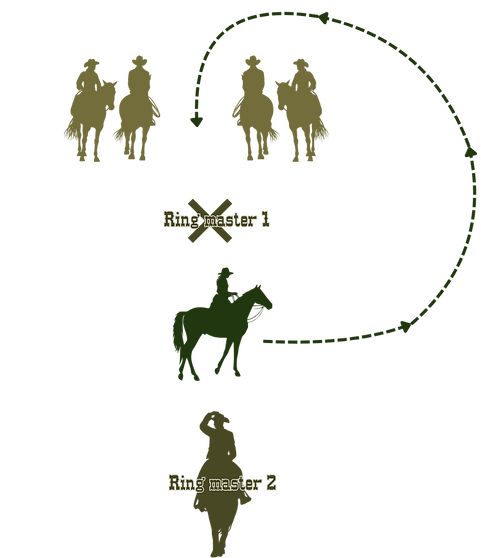
The rider will be called to the back of the arena, behind Ring Master 1, where they will be expected to perform a lope circle in a clock wise position. This may involve completing between one to three circles around the judge, followed by an extended lope circle again, typically one to three laps, depending on the rider's performance.
Upon completion of the extended lope, the Ring Master will cue the rider to perform a hard stop directly in front of them. After the stop, the rider must return to the group at a walk, re-entering from behind and taking their original position in the lineup.
This portion of the class is also evaluated on rider etiquette and overall presentation.
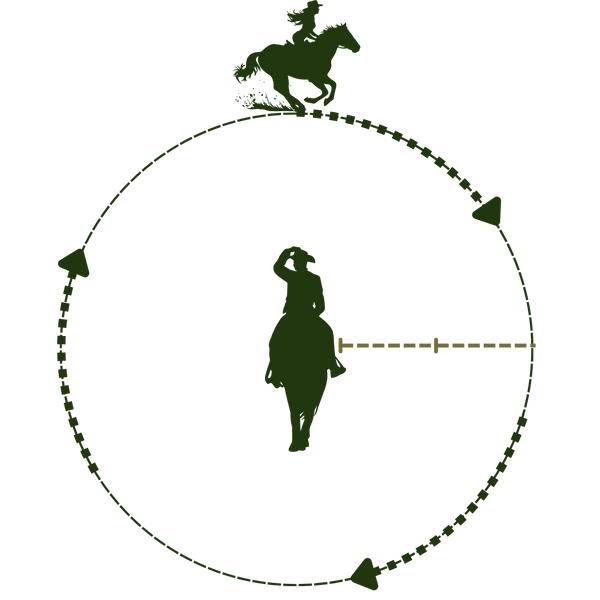
When performing your circles around Ring Master 2, A rider needs to make sure they are using the correct spacing.
The rider should maintain a distance of two full horse lengths from the Ring Master at all times. This spacing gives a clear view of the rider from all angles and ensures the Ring Master can also see the rider’s game tag.
If a rider circles too close to the Ring Master, it becomes harder to properly see the connection between horse and rider. This will lead to a point deduction of 2 to 4 points, depending on whether the rider corrects their circle size. This includes both Gait Sets.
Circle Spacing and What you need to know
Here are some examples of good and bad ridden Circles
Good Example: Riders Screen
Bad Example: Riders Screen
Good Example: Commanders Screen
Bad Example: Commanders Screen
Once a rider has completed their circle and executed the required hard stop, they will be asked to return to the group at a walk gait. This controlled pace allows both Ring Masters enough time to fully observe the rider’s arena & Riders awareness , which are important components of the final scores. Re for your line up etiquette when returning to the group.
.png)
Example of what's expected when returning to Line up.
Once the rider has returned from their Lope, Extended Lope and completed their hard stop presentation, they are expected to remain still, quietly observing the remainder of the event. The calmer and more respectful the rider appears in game and the better behaved their horse is the more likely they are to receive a higher score in the Rider Etiquette category
What's expected when you return:
Once the judges have announced that the competition has concluded and scoring is underway, riders are welcome to dismount, exit the arena, or remain in place while waiting for the final results.
Riders who place 1st, 2nd, and 3rd will be invited to perform a canter lap around the arena as part of the Winners' Presentation and Photos.